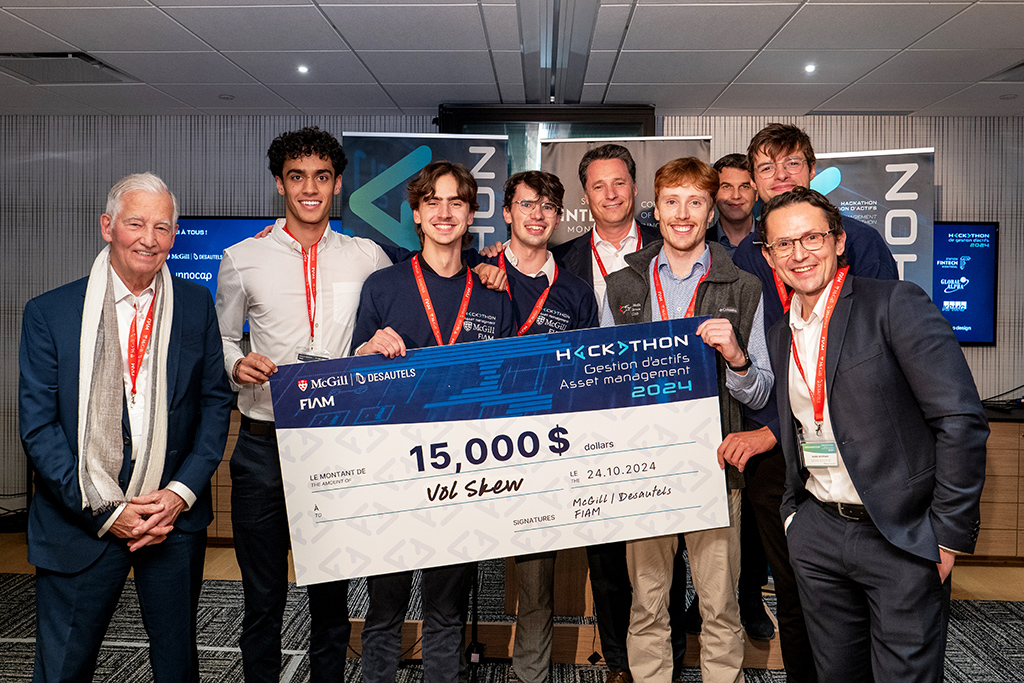
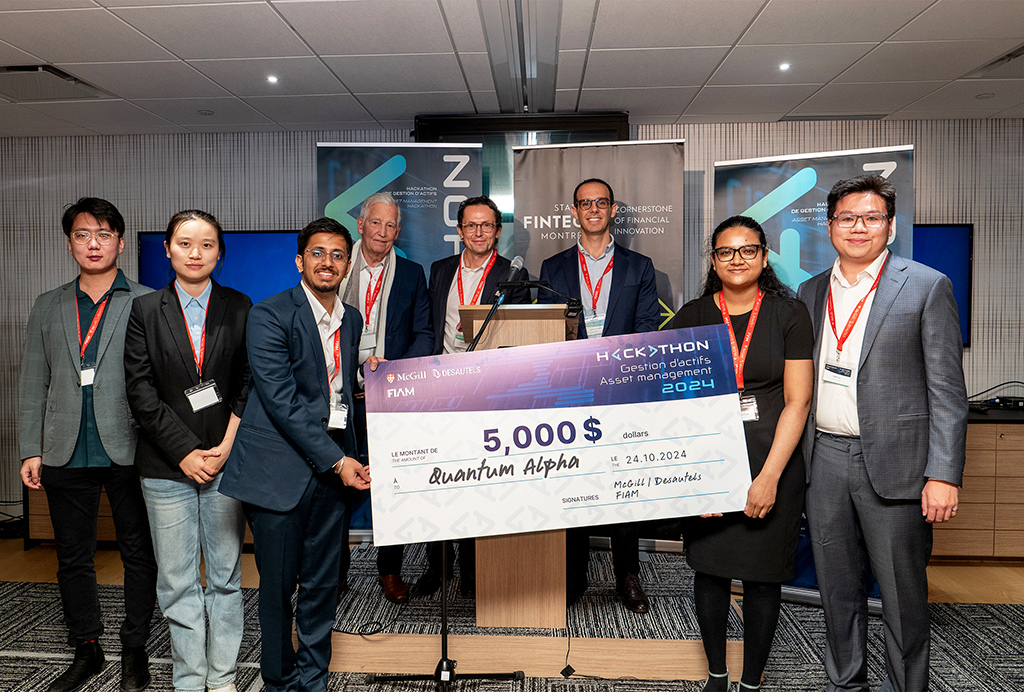
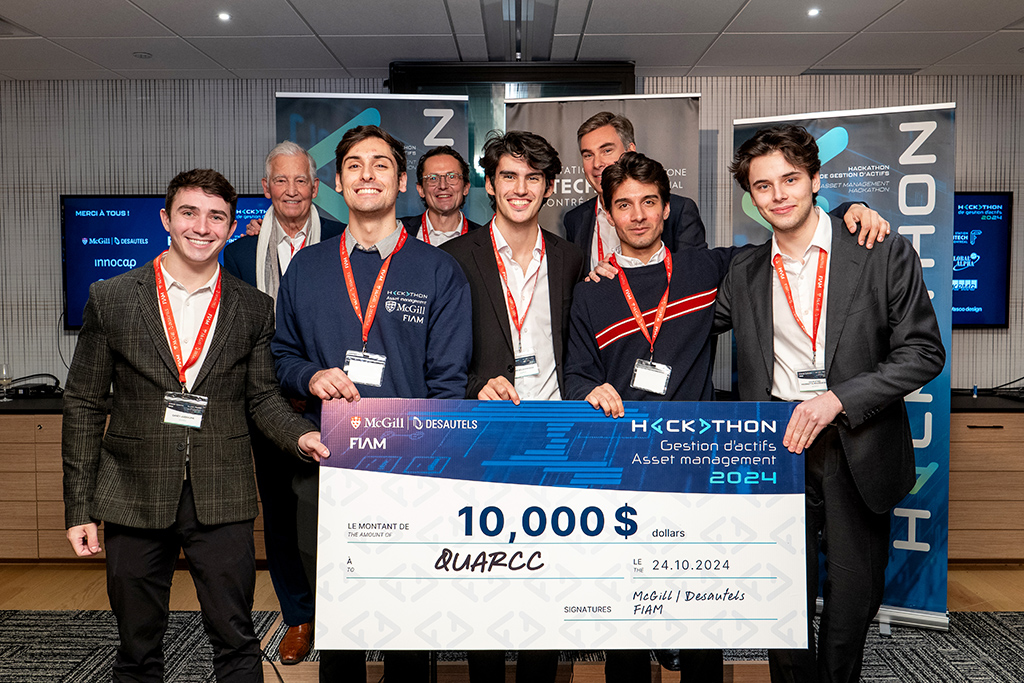
The competition consisted of two main phases. In the initial phase, the very first challenge, teams were tasked with developing bottom-up stock-picking strategies for portfolio construction using AI and machine learning. They worked with a dataset of approximately 1,000 large-cap U.S. stocks, each with over 140 signals per month, spanning the past 23 years of financial markets data. The goal was to build and back-test monthly rebalanced portfolios to identify high-performing strategies, establishing a foundation for advancing to the final round which took place on October 23 and 24, 2024.
In the final challenge, the top selected by a review committee 10 teams faced a new, more complex task. Building on their previous work, they were now required to design an institutional-grade investment product under real-world constraints. This included restrictions to long-only positions, specific limits on portfolio turnover, volatility, and risk, and a prohibition on leverage. Additionally, they shifted focus to a larger set of mid- to small-cap U.S. stocks (2,500 to 4,000 monthly) and an extended data range from January 2000 to August 2024. Teams were also required to maintain portfolios with a minimum of 50 stocks and a maximum of 100.
The objective for each team was to tackle these constraints while crafting a robust solution for optimized portfolio construction. They were encouraged to incorporate any additional data they believed could enhance their models’ performance. Their key tasks included:
1. Identifying effective machine learning methods for portfolio construction.
2. Recognizing key financial factors that could improve stock selection.
3. Optimizing stock selection and allocation to maximize performance within the set parameters.
4. Running back-tests to evaluate the historical performance of their portfolios.
The following are the teams’ summaries of their approaches to solving this complex challenge.